The Plan: John Wilkes Booth and the Plot to Destroy the U.S. Government
 |
| John Wilkes Booth |
For generations, schoolchildren have learned that the assassination of Abraham Lincoln was the act of a deranged failed actor. As we have seen, John Wilkes Booth was quite the opposite of a "failed actor". He was one of America's biggest stars. But surely he must have been out of his mind to attack Lincoln at Ford's Theatre. The idea seems like madness, considered in isolation.
But Booth was not acting alone.
At the moment he entered the State Box at Ford's, he was convinced his fellow conspirators were taking coordinated actions that would paralyze -- perhaps even destroy -- the government of the United States. Booth was a hothead, to be sure, and an egotist. He imagined every state in the Confederacy would raise a statue of him after he struck his blow for Southern freedom. But he wasn't irrational. His actions were motivated by cold calculation and desperation, not madness.
 |
| Lewis Powell |
This was the plan, then, for April 14, 1865. Booth would got to Ford's Theatre, where he would kill President Lincoln and Union commander General Ulysses S. Grant. Conspirator George Atzerodt would go to the Kirkwood House hotel, the home of Andrew Johnson, and kill the Vice President. Conspirator Lewis Powell would go to the home of Secretary of State William Seward and kill him.
The plan was brilliant in its audacity. If successful, it would leave the United States government paralyzed, without its
president, vice president, senior cabinet officer and
general-in-charge of its army. Their deaths would
precipitate a full-blown constitutional crisis that would take days,
if not weeks, to resolve. Booth and his
conspirators could use the confusion to mask their getaway. At least, that was the thinking behind the plan.
 |
| George Atzerodt |
In actuality, things worked out quite differently. Booth was operating on faulty intelligence. General Grant did not accompany the president to the theater that night, so one of the targets escaped cleanly. Atzerodt lost his nerve. He took the revolver Booth had given him to kill Johnson and threw
it in a gutter, then went off and got drunk. Another target missed. Powell came closer to success. Claiming he was delivering medicine,
he burst into Seward’s house, beat the secretary’s son, repeatedly slashed an army private who was there to guard
the cabinet officer, then stabbed Seward so savagely
everyone assumed he was dead. A metal brace around Seward's neck saved his life.
 |
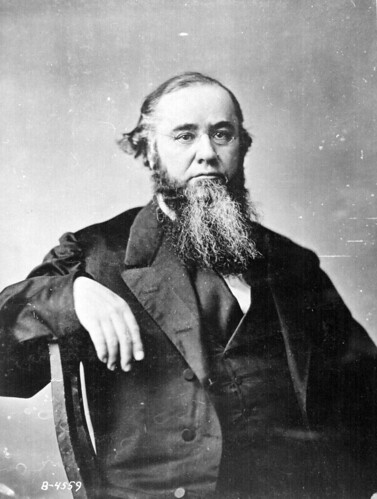
| Secretary of War Edwin Stanton |
The United States government, although stricken by the loss of its
leader, was far from paralyzed. Its response to the assassination was
immediate and unrelenting. War Secretary Edwin Stanton stepped into the power vacuum and launched a massive manhunt that would ultimately track
down Booth, Atzerodt, Powell and six other conspirators.